|
|
1DAvgVelConstAccel |
For an object in one-dimensional motion with constant acceleration, the average velocity during a time interval equals the arithmetic mean of the initial and final velocities: $v_{\text{avg}} = \frac{1}{2} \left(v_1 + v_2\right)$. |
0 |
Ready |
Edit
|
|
|
1DVector |
In one dimension, a vector can be represented by a signed number, where the sign (positive or negative) corresponds to direction and the number corresponds to magnitude. |
0 |
Ready |
Edit
|
|
|
Absorption |
Absorption is when light hits an object and doesn't bounce off or go through. |
1 |
Ready |
Edit
|
|
|
AbsorptionWarm |
If an object absorbs a lot of light, it gets warm. |
0 |
Ready |
Edit
|
|
|
AccelAreaIsVelChange |
For an object in one-dimensional motion, on an acceleration v. time graph, the area under the curve between two times (clock readings), is the change of velocity during that time interval. |
1 |
Ready |
Edit
|
|
|
AccelComptoVelComp |
An object having a positive(negative) component of acceleration along a particular dimension during a time interval will have a greater(lesser) component of velocity along that dimension at the end of the interval than at the beginning of the interval. |
0 |
Ready |
Edit
|
|
|
Acceleration |
An object's (instantaneous) acceleration is the instantaneous rate of change of its velocity. The SI unit for the magnitude of acceleration is meters per second squared ($\mathrm{m/s}^2$). |
0 |
Ready |
Edit
|
|
|
AccelFnetSameDir |
An object's acceleration, and the net force on the object, are in the same direction. |
0 |
Ready |
Edit
|
|
|
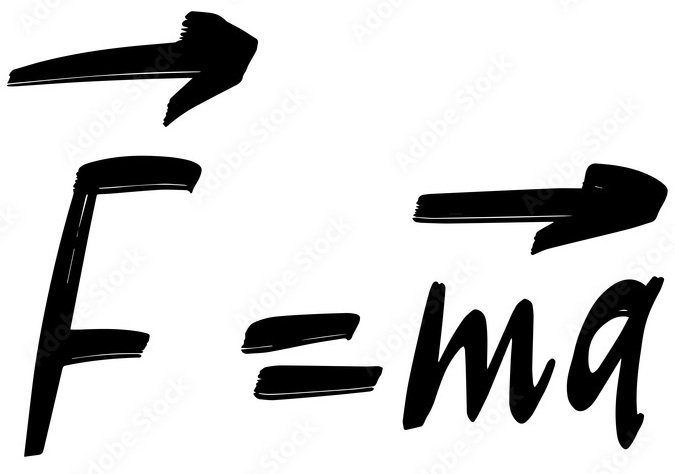
AccelFPropComponent |
The component of an object’s acceleration in a particular direction is directly proportional to the component of the net force acting on the object in that direction. |
0 |
Ready |
Edit
|
|
|
AccelFProportional |
An object's acceleration is linearly proportional to the magnitude of the net force acting on the object. |
1 |
Ready |
Edit
|
|
|
AccelMInvProportion |
Given an constant net force acting on an object, the object's acceleration is inversely proportional to the object's mass. |
0 |
Ready |
Edit
|
|
|
Accuracy |
The accuracy of a set of measurements is the difference between the mean of the measurements and the reference, or true, value. |
0 |
Ready |
Edit
|
|
|
AngleOfIncidence |
The angle of incidence of a light ray on a surface or interface is the angle between the incident light ray and the normal to the surface or interface. |
1 |
Ready |
Edit
|
|
|
AngleOfReflection |
The angle of reflection of a light ray from a surface or interface is the angle between the reflected light ray and the normal to the surface or interface. |
1 |
Ready |
Edit
|
|
|
AngleOfRefraction |
The angle of refraction of a light ray from a surface or interface is the angle between the refracted light ray and the normal to the surface or interface. |
0 |
Ready |
Edit
|
|
|
AngularMomentumConserved |
Angular momentum is conserved. |
0 |
Ready |
Edit
|
|
|
AverageAcceleration |
An object's average acceleration in a time interval is its change of velocity in the time interval, divided by the duration of the time interval. The SI unit for the magnitude of average acceleration is meters per second squared ($\mathrm{m/s}^2$). |
1 |
Ready |
Edit
|
|
|
AverageSpeed |
The average speed of an object in a time interval is the distance traveled by the object in the time interval, divided by the duration of the time interval. The SI unit for average speed is meters per second ($\mathrm{m/s}$). |
1 |
Ready |
Edit
|
|
|
AverageVelocity |
An object's average velocity in a time interval is its displacement in the time interval, divided by the duration of the time interval. The SI unit for the magnitude of average velocity is meters per second ($\mathrm{m/s}$). |
1 |
Ready |
Edit
|
|
|
BalancedForceVelNoChange |
Balanced forces acting on an object do not change the object's velocity. |
0 |
Ready |
Edit
|
|
|
BalancedUnbalanced |
If the forces acting on an object cancel, they are balanced. If the forces do not cancel, they are unbalanced. |
0 |
Ready |
Edit
|
|
|
Change |
The change in a quantity is the final value of the quantity minus the initial value of the quantity. |
0 |
Ready |
Edit
|
|
|
ChargeConserved |
Electric charge is conserved. |
0 |
Ready |
Edit
|
|
|
ChemicalEnergy |
Chemical energy is energy stored in chemical bonds. |
0 |
Ready |
Edit
|
|
|
Claim |
A claim is an assertion based on evidence or knowledge. |
0 |
Ready |
Edit
|
|
|
ClockReading |
A clock reading is a labeled instant. |
1 |
Ready |
Edit
|
|
|
ConcaveLens |
A concave lens is a lens with inward-curving surfaces. |
0 |
Ready |
Edit
|
|
|
ConcaveLensDiverge |
A concave, or diverging, lens spreads light rays apart. |
1 |
Ready |
Edit
|
|
|
ConcaveMirror |
A concave mirror is an object with a reflecting surface on the inside of a curve. |
0 |
Ready |
Edit
|
|
|
ConcaveMirrorConverge |
A concave, or converging, mirror brings light rays together. |
1 |
Ready |
Edit
|
|
|
ConservationFlux |
The change in the amount of a conserved quantity in a system equals flux of the quantity into or out of the system. |
0 |
Ready |
Edit
|
|
|
ConstAccelTotalDist |
An object moving in one direction with a constant, positive acceleration, at the end of successive equal time intervals will have traveled total distances that are as the ratio of the squares of the integers i.e. 1, 4, 9, 16... |
0 |
Ready |
Edit
|
|
|
ConstantAccelConstantVelChange |
An object moving with constant acceleration will experience equal changes of velocity in equal time intervals. |
1 |
Ready |
Edit
|
|
|
ConstantAccelSuccessiveDistances |
An object moving in one dimension with a positive velocity and a constant, positive acceleration, in successive equal time intervals will travel distances that are as the ratio of the odd numbers i.e. 1, 3, 5, 7... |
0 |
Ready |
Edit
|
|
|
ConstantSpeedConstantDist |
An object moving at constant speed will travel equal distances in equal time intervals. |
2 |
Ready |
Edit
|
|
|
ControlVariable |
The controlled variable(s) of a controlled experiment are the quantities whose values are kept constant by the investigator. |
0 |
Ready |
Edit
|
|
|
ConvergingLensFocalRay |
For a converging lens, the focal ray originates at the object, travels through the front focus, passes through the lens, and changes direction to travel parallel to the lens axis. |
0 |
Ready |
Edit
|
|
|
ConvergingLensMirrorImages |
The nature of the images formed by a converging lens or mirror depends on the object distance $d_\text{o}$ and the focal length $f$ as follows: $d_\text{o} > 2f$, real, inverted, and smaller; $d_\text{o} = 2f$, real, inverted, and the same size; $2f > d_\text{o} > f$, real, inverted, larger; $d_\text{o} = f$, no image; $d_\text{o} < f$, virtual, upright, larger. |
1 |
Ready |
Edit
|
|
|
ConvergingLensParallelRay |
For a converging lens, the parallel ray originates at the object, travels parallel to the lens axis, passes through the lens, and changes direction to pass through the back focus. |
0 |
Ready |
Edit
|
|
|
ConvergingMirrorFocalRay |
For a converging mirror, the focal ray originates at the object, passes through the front focus, is reflected, and travels parallel to the mirror axis. |
0 |
Ready |
Edit
|
|
|
ConvergingMirrorParallelRay |
For a converging mirror, the parallel ray originates at the object, travels parallel to the mirror axis, is reflected, and passes through the front focus. |
0 |
Ready |
Edit
|
|
|
ConvexLens |
A convex lens is a lens with outward-curving surfaces. |
0 |
Ready |
Edit
|
|
|
ConvexLensConverge |
A convex, or converging, lens brings light rays together. |
1 |
Ready |
Edit
|
|
|
ConvexMirror |
A convex mirror is an object with a reflecting surface on the outside of a curve. |
0 |
Ready |
Edit
|
|
|
ConvexMirrorDiverge |
A convex, or diverging, mirror spreads light rays apart. |
1 |
Ready |
Edit
|
|
|
DarkColorAbsorb |
A dark-colored object absorbs most of the light that hits it. |
0 |
Ready |
Edit
|
|
|
DependentVariable |
The dependent variable of a controlled experiment is the quantity whose value changes in response to changes in the value of the independent variable. |
0 |
Ready |
Edit
|
|
|
DiffuseReflection |
Diffuse reflection is when an incoming light ray is reflected in all directions. |
0 |
Ready |
Edit
|
|
|
DirChangeCurve |
While an object's direction of motion is changing, it moves in a curved path. |
0 |
Ready |
Edit
|
|
|
Direction |
Definition of direction, TBD |
0 |
Ready |
Edit
|